7 Sheet Metal Fabrication Techniques in Modern Manufacturing
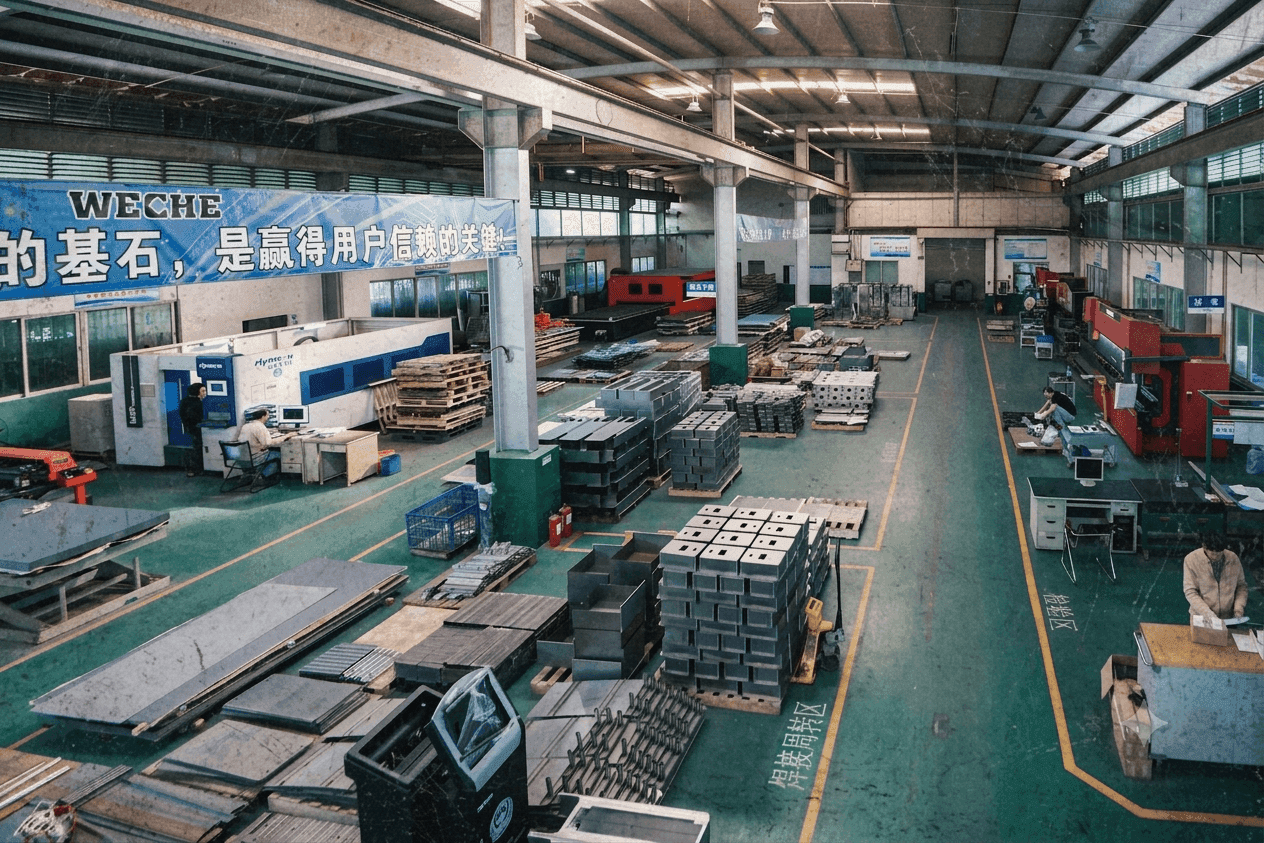
Discover the 7 core sheet metal fabrication techniques —— form the backbone of modern manufacturing, covering the full workflow from blanking and forming to joining and surface finishing. It examines the working principles, typical use cases, and cost-performance advantages of laser cutting, punching, bending, deep drawing, welding, mechanical fastening, and surface treatment. Learn how mastering these foundational techniques and implementing robust Design for Manufacturing (DFM) principles can help engineers and overseas B2B buyers optimize production costs, control tight tolerances, minimize material deformation, and accelerate supply chain efficiency.
Sheet metal fabrication stands as one of the most adaptable manufacturing processes across industrial sectors, powering everything from server enclosures and EV battery housings to architectural facades and aerospace panels. Modern sheet metal production follows a standardized end-to-end workflow built on seven core techniques, spanning blanking, forming, joining and final finishing. Understanding this process chain enables design engineers to optimize part geometry, shorten lead times and reduce costs for both custom low-volume prototypes and high-volume mass production runs.
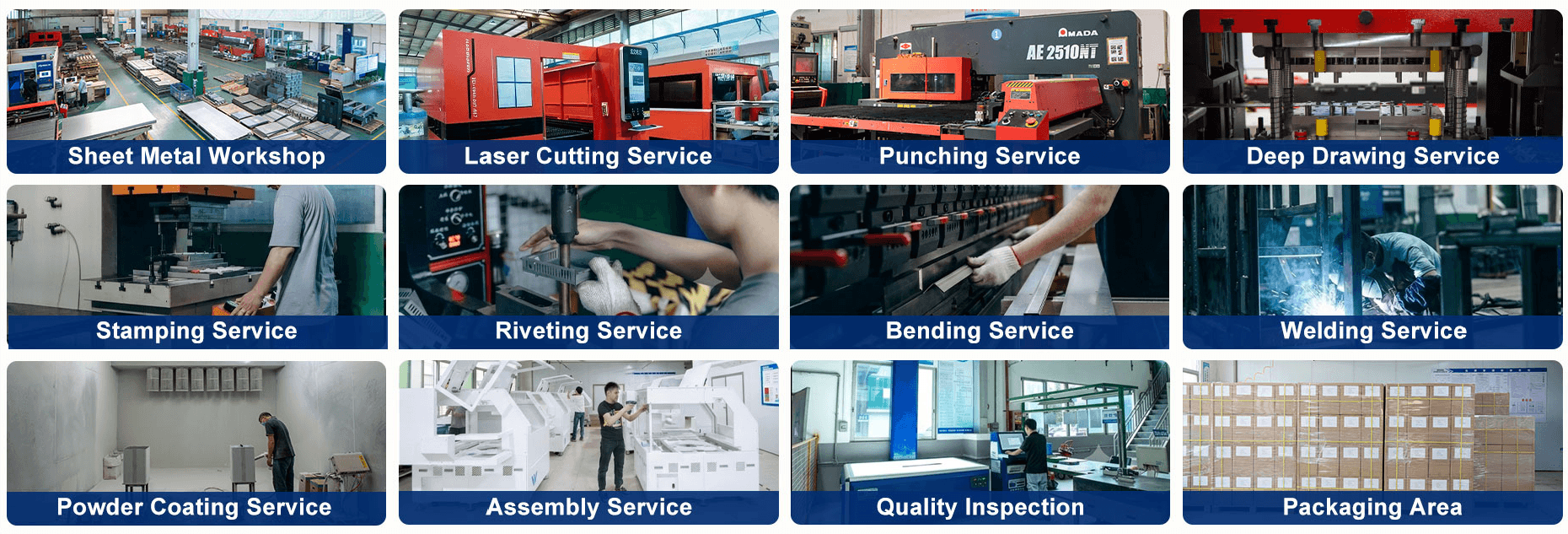
As the dominant blanking method in contemporary job shops, laser cutting delivers unmatched dimensional accuracy for complex two-dimensional profiles. By focusing a high-power laser beam through a CNC-controlled cutting head, the process melts or vaporizes material with an extremely narrow heat-affected zone, producing clean, nearly burr-free edges on steel, stainless steel, aluminum and even copper up to 25mm thick. For low-volume custom projects, laser cutting eliminates upfront tooling costs that make small batches uneconomical with stamping. It handles intricate cutouts, tight-radius holes and irregular contours impractical with traditional punching, making it the universal first step for most custom sheet metal work.
For medium to high-volume orders, punching delivers faster cycle times and lower per-unit costs than laser cutting for repetitive features. Equipped with rotating turrets holding dozens of standardized tool shapes, punch presses create holes, slots, louvers, countersinks and simple formed features such as embosses and stiffening ribs in a single machine cycle. The process excels at parts with uniform hole patterns, such as ventilation grilles and electrical cabinet panels. When paired with advanced nesting software, punching maximizes sheet utilization, cutting material waste and overall production expenses for large-quantity orders.
Press brake bending is the transformative process that turns flat blanks into three-dimensional functional parts, serving as the backbone of all sheet metal forming operations. Modern CNC press brakes use precision backgauges and real-time angle measurement systems to deliver consistent bend angles, even across varying material thicknesses and grain directions. Experienced operators account for springback — the inherent tendency of metal to rebound slightly after bending — by over-bending by a calculated degree. From simple 90-degree mounting brackets to complex multi-bend equipment enclosures, this technique produces the structural shapes used in nearly every sheet metal assembly.
For highly complex, contoured, or seamless three-dimensional geometries, standard press brake bending falls short. Manufacturing plants instead turn to Stamping and Deep Drawing.
Stamping utilizes heavy-tonnage hydraulic or mechanical presses equipped with custom-engineered hard tooling (dies) to shape, blank, or emboss sheets in a single stroke. When the depth of the part exceeds its radial dimension—such as in automotive oil pans or specialized fluid containers—Deep Drawing is employed. The sheet is progressively radial-drawn into a forming die by a mechanical punch. While the initial tooling costs are high, the unit cost drops drastically for mass-production runs, making it a staple for industrial-scale supply chains.
Once individual panels are cut and formed, they must be fused into a unified assembly. The choice of welding technique depends heavily on the material properties, aesthetic demands, and the final operating environment of the product.
The final core technique, surface finishing, transforms raw fabricated parts into finished end products by boosting corrosion resistance, wear durability and visual quality. A fabrication process isn't truly complete until the raw metal is protected against environmental degradation. The choice of finish depends on both function and form.
The final gatekeeper of quality is the assembly and testing line. Here, hinges, gaskets, glass windows, and hardware are installed onto the finished sheet metal structures.
More importantly, it is the stage where DFM (Design for Manufacturing) validation pays off. Experienced engineers audit the final product against strict tolerances, checking for gap consistency, paint thickness, and alignment. A robust DFM approach in the early engineering stages ensures that all 7 core techniques work in harmony, preventing costly re-work and delivering a hardware product that fits seamlessly into the global market.
As a sheet metal manufacturer with 18 years of industry experience, a 30,000㎡ production facility and over 20+ sets of professional production equipment, LONGWANG integrates all seven core processes under one roof—from precision laser cutting and high-efficiency CNC punching to press brake bending, deep drawing, certified welding, mechanical fastening and comprehensive surface finishing. Unlike ordinary suppliers that only deliver semi-finished fabricated parts, we provide a complete one-stop solution covering DFM optimization, in-house assembly, functional testing and finished product packaging, helping clients reduce supplier management costs, shorten project lead times, and avoid quality discrepancies across multi-vendor chains.
Backed by ISO9001 and IATF16949 certifications, our full-process quality inspection system ensures strict compliance with dimensional tolerances and performance standards for every batch. We serve global customers across energy storage, EV charging, industrial control, medical equipment and other sectors, supporting both low-volume custom prototyping and high-volume mass production. Our engineering team also offers professional drawing review and process optimization services to help you translate design ideas into robust, ready-to-install sheet metal products.
Next
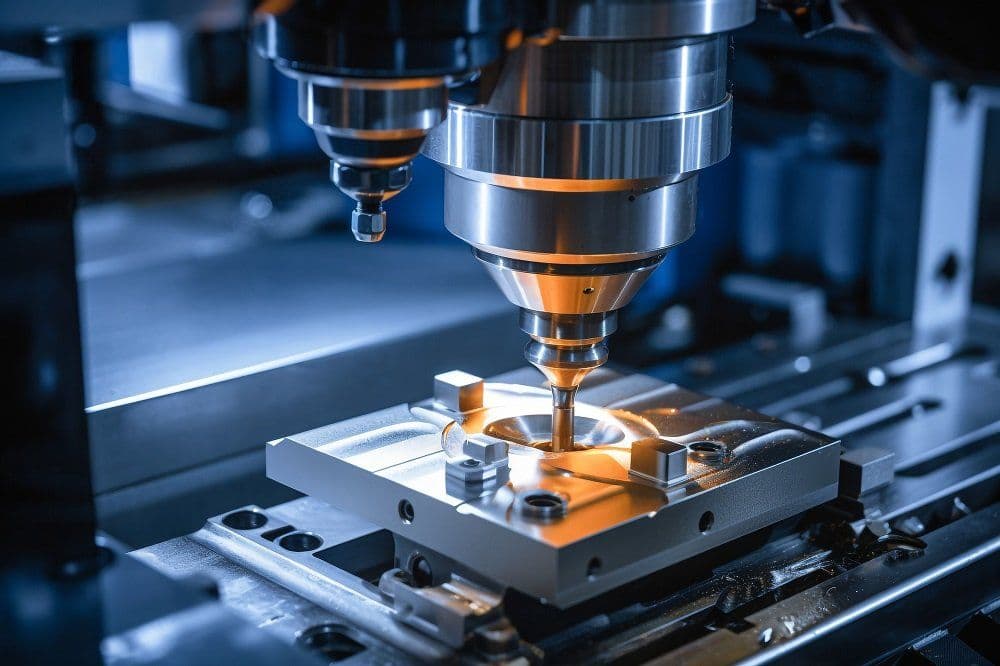
CNC Machining Tolerances: What They Are and How to Achieve Them?
2026-04-04Imagine ordering a shaft that must fit into a bearing. If the shaft is 0.2 mm too large, it won’t enter. If it’s 0.2 mm too small, it will rattle and fail prematurely. This is where machining tolerance comes into play. In simple terms, tolerance is the permissible deviation from a designed dimension. It defines the acceptable range between the maximum and minimum limits of a feature – such as length, diameter, or depth. No manufacturing process is perfect; tools wear, temperatures fluctuate, and vibrations occur. Tolerances tell engineers and machinists: “You don’t have to hit the exact number, but you must stay within this zone.” In the world of CNC machining, tolerance is the invisible thread that separates a functional part from a failed one. But what exactly is machining tolerance, and how do manufacturers consistently achieve it? Whether you're designing aerospace components, medical devices, or automotive parts, understanding tolerances is essential. This article breaks down the concept of CNC machining tolerances and provides actionable strategies to achieve them—backed by real-world practices from Dongguan Longwang Hardware. 1. Types of Tolerances in Mechanical Machining Understanding the different tolerance categories helps you communicate design requirements clearly. Here are the four main types: 2. Typical Tolerance Ranges for CNC Machining Not all CNC processes are created equal. Here’s a quick reference guide: Pro Tip: Tighter tolerances dramatically increase cost. Always specify the loosest tolerance that still meets functional requirements. 3. Why Do Machining Tolerances Matter? Tolerances aren’t just numbers on a drawing – they impact every stage of product development. 4. How to Achieve Machining Tolerances: 5 Key Factors Now let’s get to the heart of the matter – how do you actually hold tight tolerances on the shop floor? Based on years of experience at Dongguan Longwang Hardware, we break it down into five pillars. 4.1 Choose the Right CNC Machine Modern high-precision CNC machines are built for micron-level accuracy. Key features include: If the machine frame lacks rigidity or has high thermal expansion, holding ±0.01 mm is nearly impossible. 4.2 Rigidity of the Machine + Tooling Rigidity is the foundation of precision. A machine that vibrates or flexes under cutting force will produce oversize or out-of-round features. Look for: Equally important: cutting tools. Sharp, well-coated tools (e.g., TiAlN, DLC) generate lower cutting forces and better surface finishes. Replace tools before they become worn – a dull tool is a precision killer. 4.3 Tool Holding and Workholding Tool holding (spindle + collet/chuck): Spindle runout directly transfers to the cutting edge. Use high-precision holders (e.g., HSK, shrink-fit) with runout < 0.005 mm. Workholding (fixtures, vises, chucks): The workpiece must be clamped rigidly but without distortion. Poor clamping can deform thin-walled parts, causing spring-back after release. Custom fixtures, vacuum chucks, and hydraulic clamping systems distribute force evenly and prevent vibration. 4.4 Environmental Control Temperature is the silent enemy of precision. A 10°C change can expand a 100 mm steel part by about 0.012 mm – enough to scrap a tight-tolerance job. Best practices: Cleanliness also matters. Chips, dust, and residue can cause incremental wear on guideways and ball screws, gradually degrading accuracy. 4.5 Operator Skill & Programming Expertise Even the best machine is only as good as the person running it. Skilled CNC programmers: Good G-code programming isn’t just about making chips – it’s about making consistent chips, pass after pass. 5. Tolerance Grades and What They Mean for You Here's a practical reference for common tolerance requirements: 6. Common Tolerance Mistakes to Avoid 7. What Is CNC Precision Machining? CNC precision machining is a subtractive manufacturing process that uses computer-controlled machine tools to remove material from a workpiece to create parts with extremely tight tolerances and fine surface finishes. Key Characteristics of Precision CNC Machining: Industries That Rely on Precision CNC Machining: Machining tolerance is not a restriction – it’s a specification of quality. It tells the supplier what is acceptable, the operator what to aim for, and the customer what to expect. By understanding the types, ranges, and methods to achieve them, you can design better products, reduce scrap, and control costs.At Dongguan Longwang Hardware, precision CNC machining is our core competency. With over 18 years of experience, ISO 9001,IATF16949 certification, and a commitment to continuous improvement, we deliver precision parts that meet the most demanding specifications—on time and on budget.
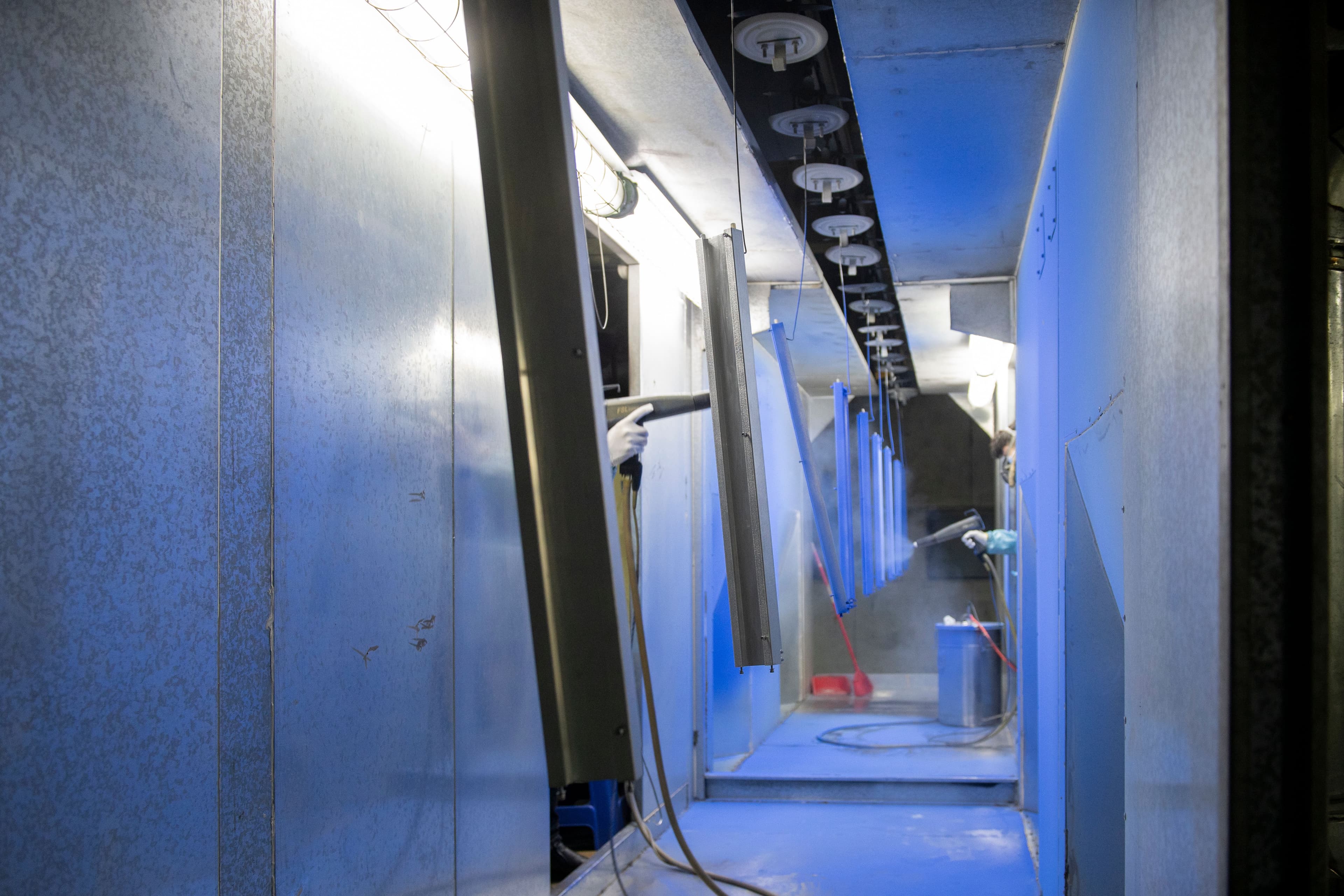
Why Surface Treatment Matters in Sheet Metal Fabrication
2026-07-07Surface treatment plays a key role in improving the durability, corrosion resistance, and appearance of sheet metal parts. It enhances performance, extends service life, and meets functional and aesthetic requirements across various industries.

Get in Touch With us
Helping customers grow steadily and achieve win-win development

Your trusted partner for CNC machining, sheet metal fabrication, stamping, and assembly. From prototyping to mass production with strict quality control.
tel:
0769-82763299
Mobile:
+86 18988716988
fax:
0769-82763199
Address:
No.3 Longze Road, Chang'an Town, Dongguan City, Guangdong Province, China,523861


Copyright © 2008-2026 | Dongguan Longwang Hardware Co., Ltd. | All Rights Reserved.


