The Core Purpose of Powder Coating in Sheet Metal Fabrication
In custom precision manufacturing, a part is only as good as its defense against the environment. While advanced laser cutting and multi-axis CNC bending define the structural integrity of a sheet metal component, it is the post-fabrication surface treatment that dictates its real-world lifespan.
Among various options, powder coating has become the premier industrial standard. Below, we break down the core engineering purposes of powder coating and why it remains indispensable for modern sheet metal enclosures, brackets, and structural assemblies.
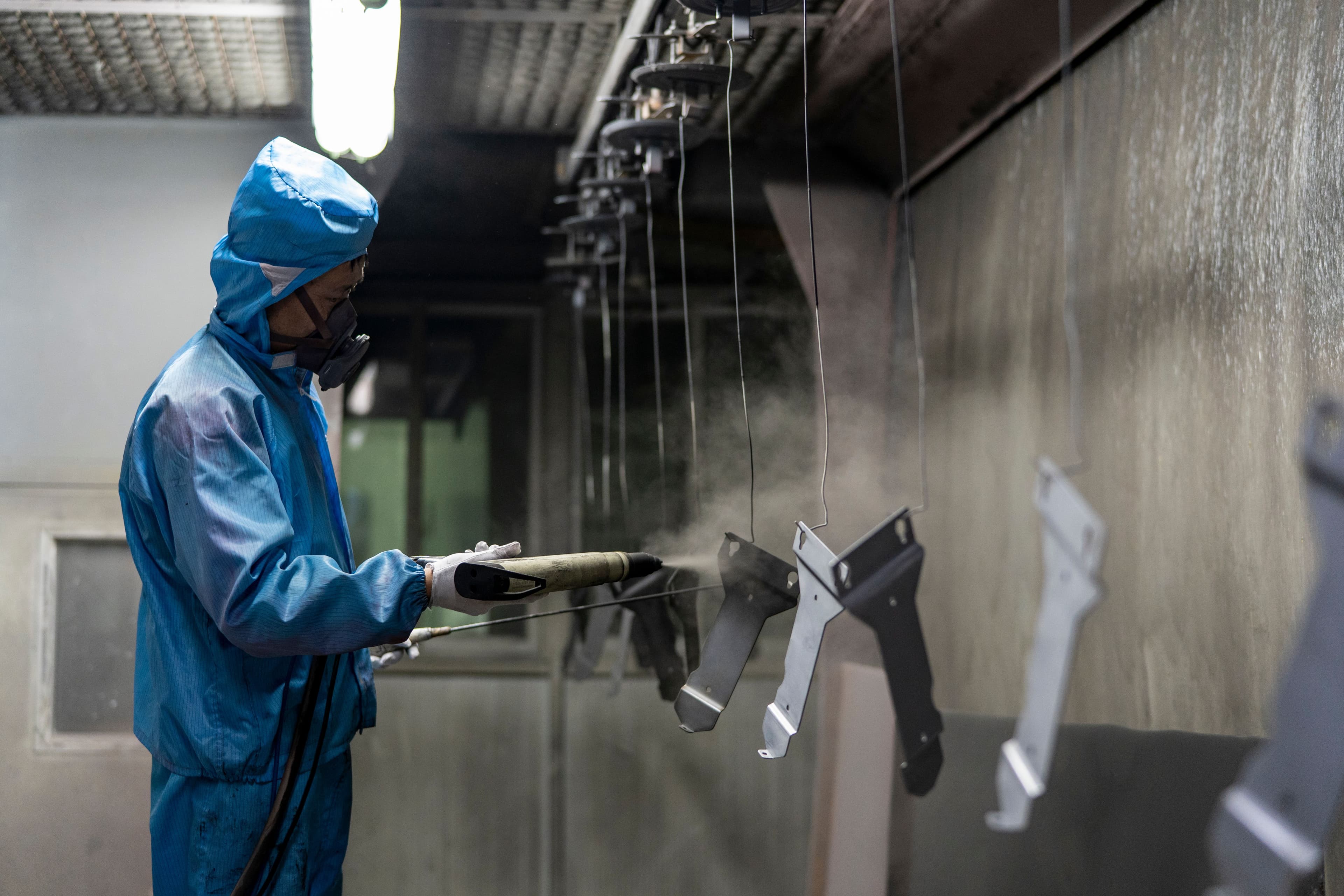
At its core, powder coating is an advanced dry finishing process where electrostatically charged polymeric powders are sprayed onto grounded sheet metal components. The parts are then moved into a curing oven, typically heated between 180°C and 200°C. Under this heat, the powder melts and cross-links to form a continuous, chemically bonded plastic-like skin.
The primary role of this process goes far beyond simple cosmetic enhancement. It transforms raw, vulnerable metal into a highly functional, resilient, and specialized industrial product capable of enduring harsh operational stresses.
Unprotected carbon steels begin to oxidize almost immediately when exposed to atmospheric moisture. Even zinc-coated steels (like SGCC or SECC) can suffer from white rust over time if their protective layer is compromised during cutting or stamping.
The foremost purpose of powder coating is to provide an impermeable physical barrier. Unlike traditional liquid paint, which can leave microscopic pinholes as solvents evaporate, a properly cured powder coat forms a dense, non-porous polymer network. This shield prevents oxygen, moisture, and aggressive chemical agents from ever reaching the underlying metal, drastically extending the service life of the component.
Sheet metal parts frequently endure mechanical stress during transit, assembly, and field operation. Traditional wet paint is brittle and prone to chipping when subjected to impacts or flexing. Powder coating, however, retains a degree of structural flexibility. Its thermal cross-linking ensures excellent adhesion, allowing the coating to flex with the metal without cracking.
Furthermore, a notorious pain point in fabrication is "edge thinning." Liquid paint naturally pulls away from sharp, laser-cut edges due to surface tension, leaving corners vulnerable to early rust. Electrostatic powder coating does the opposite: the electric field concentrates at sharp edges and corners, pulling the powder in and ensuring uniform edge coverage across the entire geometry.
In the B2B sector, the aesthetic finish of a product reflects the engineering quality within. Raw sheet metal often bears subtle superficial imperfections—such as tool marks from press brake dies, micro-scratches from material handling, or slight heat tinting near weld seams.
Powder coating flawlessly conceals these manufacturing marks, providing a uniform, premium finish. Available in a vast spectrum of colors and gloss levels, it also offers specialized textures like fine sand-grain, wrinkles, or heavy textures. These textured finishes are highly effective at hiding fingerprints, smudges, and minor field scuffs, ensuring that heavy-duty machinery or indoor server racks maintain a professional brand image.
From a Design for Manufacturing (DFM) standpoint, powder coating cannot be treated as an afterthought. Because it is a thick-film technology, a standard application adds anywhere from 50μ"m" to 120μ"m" (2" to " 5" mils" ) of material per side.
Engineers must account for this buildup during the early design phases:
Mating Holes & Threads: Threaded holes and tight-tolerance slip fits must be shielded (masked) with high-temperature silicone plugs or tape during spraying. Alternatively, internal threads should be tapped oversized or chased post-coating.
Hinges & Slides: Movable assemblies must feature adequate clearance gaps in the CAD model to prevent the cured polymer layers from binding or scraping against each other during operation.
A powder coat is only as reliable as the pre-treatment beneath it. If a shop attempts to spray over residual stamping lubricants, anti-rust oils, laser scale, or workshop dust, the powder will fail to bond, leading to bubbling, blistering, and eventual flaking.
Achieving structural-grade adhesion requires a rigorous multi-stage chemical pre-treatment cycle. The metal must pass through sequential baths of heavy-duty degreasers, acid pickles (to remove scale), clean water rinses, and a final chemical conversion coating (such as zinc phosphating for steel or a non-chrome conversion film for aluminum). This process etches the metal on a microscopic level, creating a perfect anchor profile for the electrostatically charged powder.
While the initial setup, chemical pre-treatment, and automated line costs of powder coating represent a serious capital investment, its long-term return on investment (ROI) is unmatched.
Because the powder is applied dry, overspray can be captured, reclaimed, and recycled through a cyclone separator system, achieving material utilization rates near 95%. Combined with incredibly low reject rates compared to the runs, sags, and dust traps common to wet painting, powder coating significantly reduces per-part manufacturing costs in medium-to-high volume production runs. For the end user, fewer field failures translate directly to reduced warranty claims.
Modern manufacturing demands strict adherence to environmental compliance. Traditional wet paints rely heavily on solvent carriers that release high volumes of Volatile Organic Compounds (VOCs) and Hazardous Air Pollutants (HAPs) into the atmosphere during spraying and baking.
Powder coating is a completely solvent-free process. It releases zero VOCs, poses no significant air pollution risks, and minimizes hazardous waste disposal headaches. For global procurement managers looking to fortify their green supply chain initiatives and meet strict environmental audits, specifying powder coating ensures total regulatory compliance without sacrificing performance.
Next
Guide to Sheet Metal Finishing Techniques: Applications, Pros & Cons
2026-07-17This guide explores common sheet metal finishing techniques, outlining their applications, advantages, and limitations to help you select the most suitable process for performance, durability, and appearance requirements.
Why Is Powder Coating the Top Choice for Chassis and Cabinet Shells?
2026-07-15Powder coating offers excellent durability, corrosion resistance, and a uniform finish, making it ideal for protecting chassis and cabinet shells in demanding environments.

Get in Touch With us
Helping customers grow steadily and achieve win-win development

Your trusted partner for CNC machining, sheet metal fabrication, stamping, and assembly. From prototyping to mass production with strict quality control.
tel:
0769-82763299
Mobile:
+86 18988716988
fax:
0769-82763199
Address:
No.3 Longze Road, Chang'an Town, Dongguan City, Guangdong Province, China,523861


Copyright © 2008-2026 | Dongguan Longwang Hardware Co., Ltd. | All Rights Reserved.


